WaterFire Season: The Braziers Go Dark, and Providence Marks Its Year by Firelight
For three decades, full lightings of WaterFire have been this city's signature — art you attend by the tens of thousands. As the 2026 season closes, an appreciation of the ritual and the river it reclaimed.
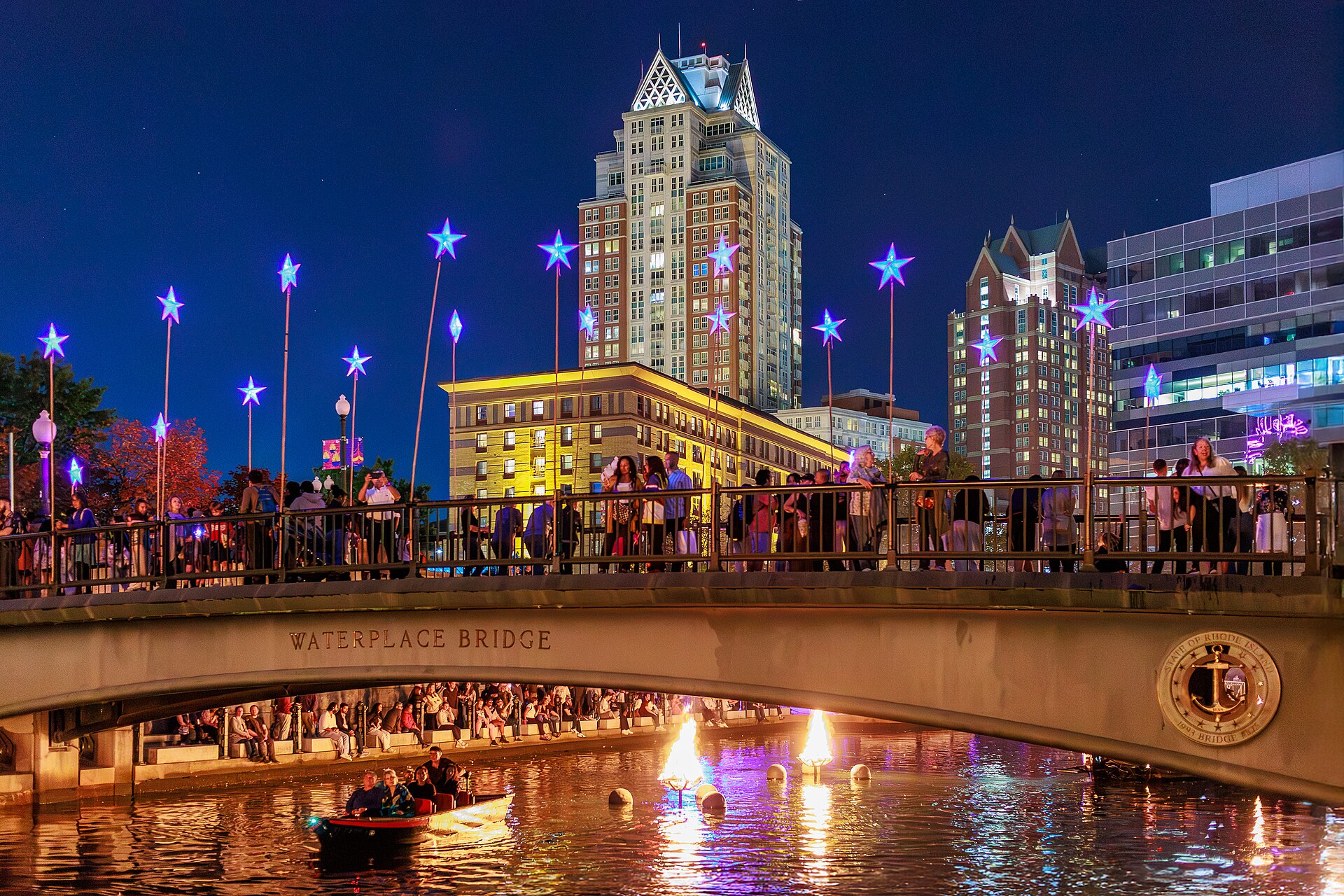
The idea sounds like a dare: nearly a hundred cedar-and-pine fires, burning in braziers down the middle of three downtown rivers, tended by boat crews in black, while the city walks the banks in something close to silence. WaterFire — artist Barnaby Evans' installation, first lit in 1994 — became the thing Providence is known for around the world, and the engine of its downtown's reinvention.
The facts of a full lighting read like liturgy because they are: fires kindled at sunset along the Woonasquatucket, Moshassuck and Providence rivers from Waterplace Park to Memorial Park; a torch-lit procession; music chosen like a mass's movements; crowds that can reach into the tens of thousands moving at the pace of people watching fire on water. The installation runs on volunteers — hundreds per season — and on the donations of the city it advertises to the world.
WaterFire's deeper work was hydraulic. It taught Providence to treat its rivers as a centerpiece a generation after the city uncovered them — the river relocation of the 1990s that moved the confluence, built Waterplace Park and the riverwalks, and turned a paved-over waterway back into an address. The fires were the celebration that made the infrastructure beloved; a city that has watched its rivers burn beautifully does not let them be buried again.
The season's arc runs from spring's first basin lightings to the autumn's final full lighting, and the closing nights have their own mood: cold air sharpening the woodsmoke, the crowds in coats, the braziers' glow against the year's earliest dark. The fires go out for winter. The river they taught a city to love runs on — which was, all along, the artwork's point.